Gas fires
The appliance everyone forgets until the pilot will not hold.
Annual services, diagnostics and repairs for your natural gas or LPG fire. Stuart is experienced with Gazco, BFM, Dru, Element4 and Kal Fire models in particular — so if yours is one of those, you are not explaining it to someone from scratch.
What a fire service covers
Six checks, and one of them is the whole point.
A gas fire vents into a room people sit in for hours. The flue and the oxygen depletion sensor are not paperwork — they are the two things doing the protecting.
Burner & pilot
Burner cleaned, pilot assembly and thermocouple checked, and the flame picture looked at properly rather than glanced at.
Oxygen depletion sensor
Proved to operate. On a gas fire this is the device standing between a blocked flue and the room.
Flue & chimney draw
Spillage test and a check that the flue is doing what it is meant to — the check people skip and the one that matters most.
Coals & fuel bed
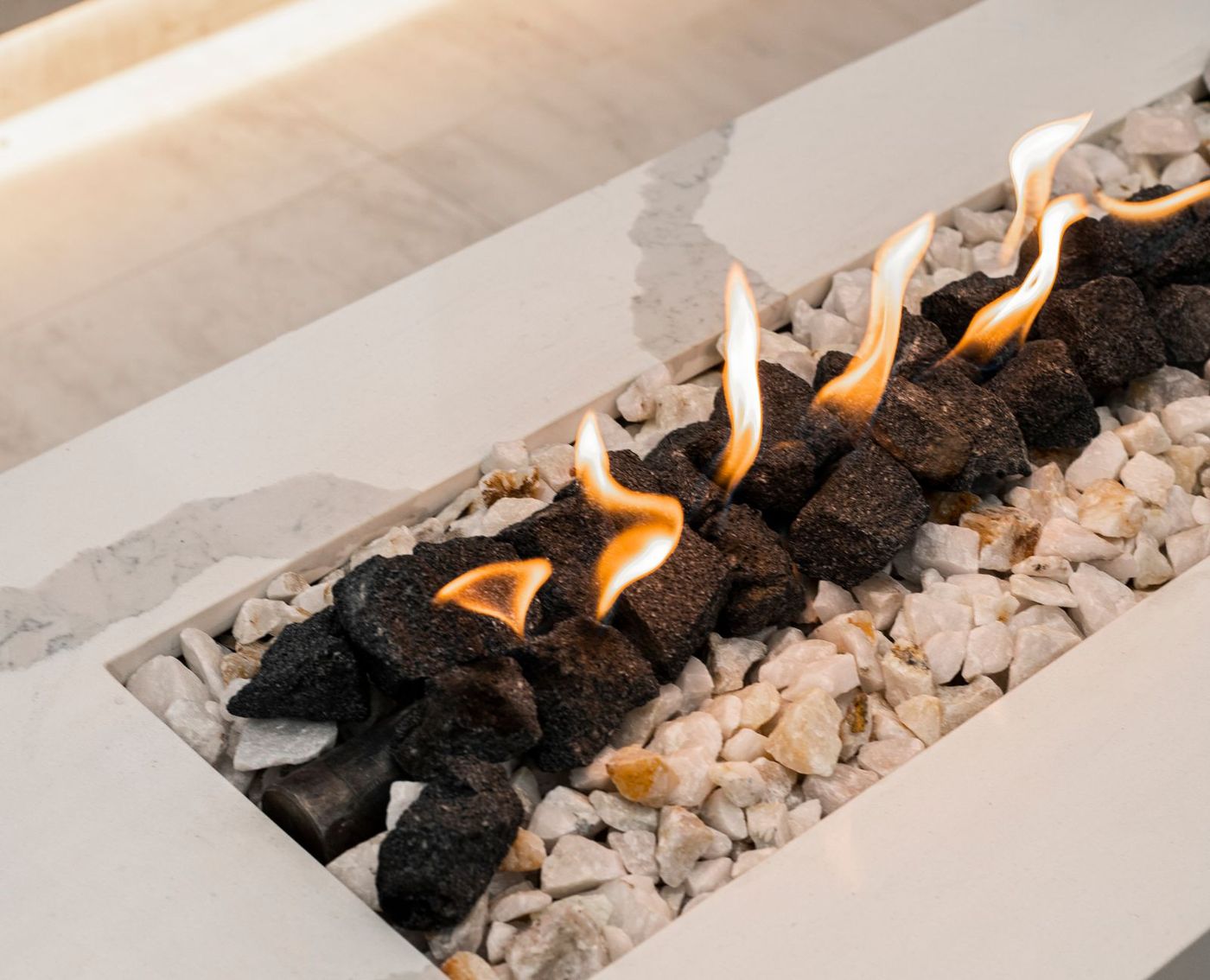
Reset exactly as the manufacturer specifies. Pebbles arranged for looks are the most common cause of sooting and a lazy yellow flame.
Glass & seals
On a glass-fronted or balanced-flue unit, the glass, gasket and clamping all inspected and reseated.
Gas soundness
The whole installation tested, plus working pressure and gas rate against the appliance data badge.

Symptoms that mean ring now rather than next autumn.
- The pilot lights and then drops out within a minute or two — usually a thermocouple or a dirty pilot, occasionally something you want found properly.
- Sooting, black marks above the fire, or a lazy yellow flame where there should be a crisp one.
- Coals or pebbles that have been rearranged at some point by somebody who thought it was decoration.
- A smell when the fire runs, or condensation and staining around the flue.
- Glass that has gone cloudy, or a seal that has hardened on a glass-fronted unit.
- A fire that has not been serviced since you moved in and you do not know when that was.